


"독일 주둔 미군 감축은 잘못" NYT비판


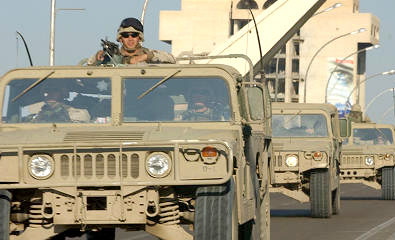 미국의 주한미군 감축 발표로 한반도 안보공백을 우려하는 시각이 높아진 가운데 미국의 유력 일간지 뉴욕 타임스가 독일에 주둔하고 있는 미군 7만여명 가운데 절반 이상을 감축하겠다는 미국 정부의 방침은 잘못된 것이라고 14일 사설을 통해 비판해 관심을 끌고 있다.
타임스 사설은 "미국이 나토(북대서양조약기구) 동맹국들과 관계를 회복하기 위해 부심하고 있는 시점에서 나온 주독 미군 감축 방침은 잘못된 생각"이라면서 "나토는 미국의 군사적 부담을 나눌 수 있는 유일한 동맹"이라고 지적했다.
사설은 "지난해 도널드 럼즈펠드 국방장관의 `늙은 유럽' 발언을 잊지 않고 있는 많은 독일인들은 주독 미군의 감축과 이에 따른 일자리 상실을 독일의 이라크 전쟁 반대에 대한 복수로 받아들일 것"이라고 밝혔다.
사설은 "이라크 전쟁을 반대하기는 했지만 독일은 전쟁기간에 자국내 미군기지 사용에 아무런 제한을 가하지 않았고 해마다 이들 기지 지원을 위해 10억달러를 부담하고 있다"면서 "경제적으로 볼 때 주독 미군 감축계획은 실패"라고 단정했다.
독일의 미군 기지는 미국 본토에 비해 중동이나 중앙아시아 지역과 더욱 가깝고 안전하며 편의시설도 잘 갖춰져 있다고 사설은 부연했다.
사설은 "베를린 장벽 붕괴 이후 주독 미군은 75%나 감축됐고 추가 감축도 배제될 수는 없겠지만 현 국방부의 계획은 과도할 뿐만 아니라 시점이 적절하지 않고 의도가 의심스럽다"고 주장했다. (konas)
-원문보기-
Military Bases in Germany
The Pentagon is proposing sharp cuts in U.S. forces in Germany, which for more than half a century has been America's biggest military outpost in Europe. It's a bad idea, particularly at a time when the United States is struggling to rebuild its relations with its NATO allies.
Washington is hoping to cut its military presence in Germany ? a little more than 70,000 soldiers ? roughly in half. Two heavy divisions now based there, and the soldiers' families, would return to the United States. They would be replaced by a much smaller light combat brigade, while other units would be rotated in and out, at considerable cost, for short-term exercises. The Air Force is also thinking of moving some of its F-16 fighter jets from Germany to Turkey, where they would be closer to Middle East trouble spots but subject to restrictions by the host government.
The large American military presence in Germany has long symbolized the understanding at the heart of NATO ? Washington's commitment to remain permanently engaged in Europe's security and to integrate its military operations with those of its major European allies. Recent history has only reinforced how important that relationship is to the United States. NATO is the only alliance capable of sharing some of the global military burdens that have now overstretched America's ground forces.
Many Germans, remembering Defense Secretary Donald Rumsfeld's scornful "old Europe" put-downs of their country last year, will see these withdrawals, and the accompanying German job losses, as payback for Berlin's diplomatic opposition to the invasion of Iraq. Washington denies that. But the Pentagon does seem to have a growing preference for stationing troops either at home or on the territories of allies ready to embrace President Bush's notions of unilateral preventive war.
Despite its criticisms of the Iraq war, Germany imposed no restrictions on the use of American bases during that conflict. It continues to deploy thousands of German soldiers to protect those bases, freeing American troops for other uses. Berlin also contributes $1 billion a year to the bases' support. Economically, the plan to bring the soldiers home is a loser.
The German bases have other advantages as well. They are much closer to the Middle East and Central Asia than bases in the United States and are in a safe country with a stable democracy and the modern conveniences that make life easier for troops on long tours overseas. Soldiers stationed there have access to a variety of training exercises and can enjoy down time with their families. The American military hospital at Ramstein Air Base, the largest outside the United States, provides specialized care for battlefield casualties from Iraq and Afghanistan as it did for those from Bosnia, Kosovo and the U.S.S. Cole.
There is nothing sacrosanct about maintaining particular Army divisions in Germany. The role of American military forces there has evolved considerably over the decades ? from occupying a defeated enemy to deterring Warsaw Pact aggression to symbolizing Washington's post-cold-war commitment to remain militarily engaged in Europe. Along the way, the size of the American presence has evolved as well. In the nearly 15 years since the Berlin Wall fell, United States force levels in Germany have dropped by roughly 75 percent. Further reductions should not be ruled out. But the Pentagon's current plans are unduly drastic, unfortunately timed and suspiciously motivated. /Published: June 14, 2004

- 관련기사보기
-





- 입력 된 100자 의견이 없습니다.
