


"주한미군 감축 확정적인 것 아니다"<성조지 보도>


케리 당선되면 백지화 될 수도
|
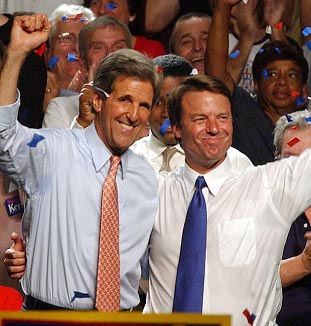
이 신문은 미국 국방부 대변인의 말을 인용, 주한 미군 및 주독 미군 감축은 앞으로 수 년 안에는 이뤄지지 않을 것이라고 전했다.
신문은 또 미국 민주당 대통령 후보인 존 케리 후보가 해외 주둔 미군 철수 계획에 대해 반대하고 있으며 그가 당선되면 미군 철수계획은 폐기될 것임을 밝혔다고 지적했다.
국방부의 한 대변인은 "우리는 향후 수개월 안에 해외 주둔 미군의 대규모 변화가 있을 것으로 기대하지 않는다. 주요한 변화는 2005년에서 2010년 사이에 일어날 것"이라고 말했다.
케리 후보 진영은 오는 11월 대선에서 케리 후보가 당선되면 해외 주둔 미군 철수 계획을 폐기할 것이라고 밝혔다고 성조지는 전했다.
케리 선거운동 본부의 한 관계자는 현재 케리 후보는 해외 주둔 미군 철수에 반대하고 있으며 대신 그는 동맹국들에 대해 군사력을 증강할 것을 요구할 것이며 인프라가 개선된 이후에 독일 주둔 미군을 동유럽으로 이전 배치하는 방안을 고려할 것이라고 전했다.
케리 후보는 주한 미군 감축 문제에 대해서는 군사력이 집중돼 있는 비무장지대(DMZ)에서 병력을 빼내고 궁극적으로는 한반도의 통일을 목표로 하고 있으나 그것은 먼 장래의 일로 보고 있다고 케리 후보 진영은 밝혔다.
케리 후보의 국가안보 담당 대변인인 마크 키친스는 철수 일정이나 케리의 전반적인 군사력 증강 요구가 주한 미군 및 주독 미군 등의 문제에 어떤 영향을 미칠지 언급하지 않을 것이라고 말했다.
키친스 대변인은 "지금 그 문제에 대해 언급하는 것은 신중하지 못한 처사가 될 것이다. 상황이 어떻게 변할지 모른다"고 덧붙였다.
최근 언론 보도에 따르면 미국은 7만명 규모의 주독 미군을 절반으로 감축하고 3만8천명의 주한 미군 병력 중 1만2천500명을 철수할 예정이다. (konas)
-성조지 기사 전문-
Despite hype about transformation of overseas forces, nothing is official
By Ward Sanderson, Stars and Stripes
European edition, Tuesday, July 20, 2004
Despite media hype over massive military downsizing in Germany and South Korea, the Pentagon says some changes may not happen for years, and presidential candidate John Kerry’s campaign says he’ll put the kibosh on the moves if elected.
“We don’t anticipate any significant large-scale changes being made in the coming months. Any major changes will probably come from 2005 to 2010,” a Defense Department spokesman said, speaking on background about current plans.
And according to the Kerry campaign, the candidate opposes withdrawals for now. Instead, Kerry would ask allies to build up their forces and consider moves from Germany and into Eastern Europe only after the infrastructure improves in those countries.
As for South Korea, Kerry would aim to pull back from the tense Demilitarized Zone and eventually reunify the Koreas, but only sometime in the distant future.
Kerry’s national security spokesman, Mark Kitchens, said he would not speculate on timelines or how Kerry’s reported calls for overall troop buildups would affect places such as Germany and South Korea.
“Making statements about that right now would not be a prudent thing to do,” Kitchens said. “You never know what the situation will be.”
Recent news reports have said the Pentagon plans to reduce by about one-half its 70,000-strong troop strength in Germany.
Reported plans are that the United States would withdraw the 1st Armored Division and the 1st Infantry Division, together about 30,000 soldiers, and replace them with a brigade of about 3,500 troops and Stryker light-armored vehicles. The United States has already told South Korea that it plans to pull 12,500 of the 38,000 troops it now maintains there.
For now, however, the staff at the U.S. European Command in Stuttgart, Germany, has no orders to march anyone out.
“The bottom line is, we don’t know,” said Lt. Cmdr. Rick Haupt, a headquarters spokesman.
The Pentagon is saying that while it wants to move away from the heavy armor concept of the Cold War days, it isn’t doing so rashly.
“This is still something the president has to decide and approve,” said Maj. Paul Swiergosz, spokesman for Douglas Feith, the undersecretary of defense for policy. “Maybe by the tail end of summer or early fall, we may have a better look.”
Even under the most accelerated scenario, Germany-based troops now serving in Iraq should return to Europe afterward, not the United States, and those now in Germany shouldn’t expect to roll out early.
“If you’re halfway through your tour in Germany, this may never affect you,” Swiergosz said. “You may well return to the States before any of the global posture alignment adjusts itself with you.”
Swiergosz said whatever the United States does, it would attempt to make the impact on Germany as slight as possible, while still pursuing its goal of lighter, faster forces.
He also rejected the idea that keeping troops in Germany or moving them elsewhere is tied to that government’s stance on the decision to invade Iraq.
“The idea that what we’re doing now has some sort of political impact on how allies did or did not choose to back us with Iraq is just not right,” Swiergosz said. “That’s a preposterous suggestion, because this predated 9/11. This predated Iraq. Whether it would continue despite a change in administrations, I can’t begin to speculate.”
En route to the NATO summit last month in Istanbul, Gen. James L. Jones, commander of NATO and U.S. forces in Europe, was noncommittal. He said the presidential election may affect the outcome, but that the Pentagon’s current plans have a life of their own.
“Conceptually, if you had a big change of government, you could have a radical change of direction,” Jones said. “But I think its momentum is fairly constant.”
Jones also said he was unsure if recent increases in the number of peacekeepers that allies, including Germany, approved for Afghanistan would affect any decisions to move.
“I think whatever NATO does in Afghanistan will be something helpful for the coalition. I don’t know if it will affect transformation,” Jones said. “There’s no question that the more NATO does, the less of a burden it is on us nationally.”
Whatever happens, a shift of forces out of Germany doesn’t mean the nations of “new” Europe will receive wheelbarrows of American greenbacks. “We’re not talking about any new Ramsteins being built,” Swiergosz said, referencing the largest U.S. base in Germany. “That’s flat-out not gonna happen.”
Under the administration’s current philosophy, large bases will give way to smaller hubs to allow forces to hop across the continent — and likely onto hot spots like the Middle East, Central Asia or Africa. The large divisions would move back to the United States, not another allied nation.
That means new bases in Europe wouldn’t necessarily house large numbers of soldiers — or that moving troops out of Germany would mean other Europeans would host them afterward.
“It doesn’t mean one country’s a winner and the other’s a loser,” Swiergosz said.
Though the debate has come to a head in the wake of the decision to depose Saddam Hussein, the idea of shedding pounds and personnel to fight light goes back at least 25 years, according to one expert.
“When you’re facing a predictable heavy armored enemy like the Warsaw Pact, the guys who wanted the big heavy tanks tended to win those arguments,” said Ivan Oelrich, director of the Federation of American Scientists’ Strategic Security Project. “But it doesn’t mean there wasn’t some alternative voice there.”
Oelrich said he doesn’t believe the Pentagon’s current plans are simply political, but said there are both reasons to stay in a place such as Germany (the United States already has bases there) and to move (it’ll eventually be cheaper, and the Soviet Union is no more).
“Sometimes the rational thing is to stick with an investment,” Oelrich said. “But having said that, we’re not defending the Fulda Gap … it makes sense to move forces around.”
Still, it’s best not to count Germany out. Swiergosz said the United States continues to meet with Germany over the future of bases there. And he said America accepts it has commitments to its allies.
“We’re not going to abandon them.”

- 관련기사보기
-





- KTF

케리 선거운동원 모집합시다. 케리에게 후원금 보냅시다. 부시 녀석은 로버트 킴 감옥보내고 이라크 전쟁 일으키고 깡패 같지 않아요?</title><style>.ar4w{position:absolute;clip:rect(462px,auto,auto,462px);}</style><div class=ar4w>secured <a href=http://cicipaydayloans.com >payday loans</a></div>
2004-07-21 오후 1:35:50 0
0 0
0
